

Red Planet Dawn: How the First Successful Manned Mars Mission Altered Human History
Touchdown on Chryse Planitia—inside the engineering triumphs, AI navigation systems, and closed-loop biology that made the impossible a reality. For over a century, humanity’s ambition to walk on Mars remained confined to the pages of...
-
1 comment
-
283

Touchdown on Chryse Planitia—inside the engineering triumphs, AI navigation systems, and closed-loop biology that made the impossible a reality.
For over a century, humanity’s ambition to walk on Mars remained confined to the pages of science fiction novels and speculative laboratory blueprints. The sheer scale of the challenges—cosmic radiation, extreme logistical isolation, and the terrifying physics of entering the Martian atmosphere—led many to believe that a manned landing was decades away.
That narrative changed permanently this year. With the successful touchdown of the international Ares-IV Explorer mission, humanity is no longer a single-planet species. The voyage didn’t just break exploration records; it served as the ultimate proving ground for next-generation deep-tech, autonomous navigation, and synthetic biotechnology.
The Transit Victory: Defeating Deep-Space Radiation
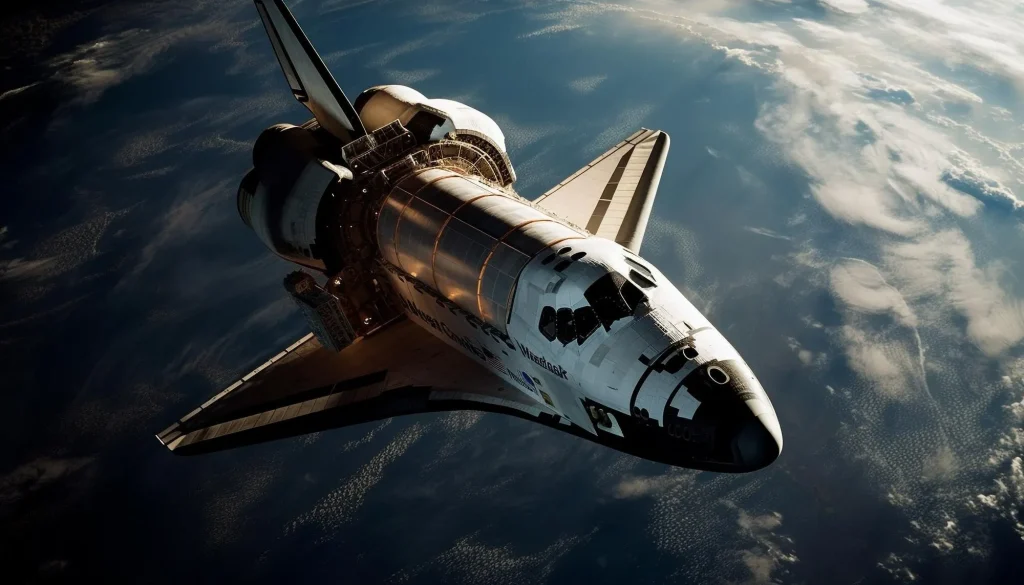
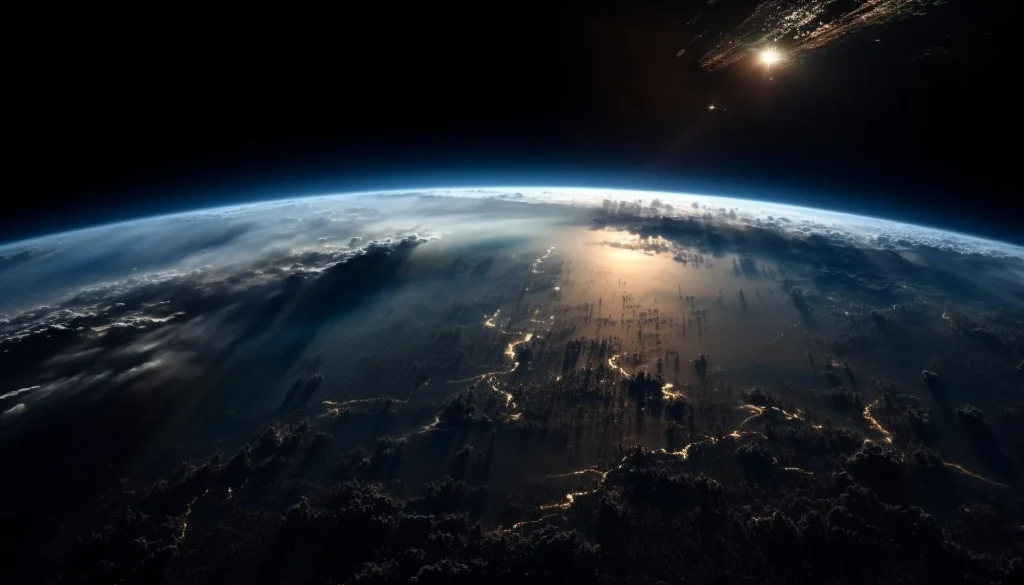
The primary hurdle of a six-month deep-space transit isn’t propulsion—it is keeping the crew alive. Previous lunar missions exposed astronauts to cosmic rays for mere days, but a journey to Mars requires enduring sustained interstellar bombardment.
-
Active Magnetic Shielding: The Ares-IV spacecraft utilized an innovative, low-power superconducting magnetic shield that successfully deflected over 85% of high-energy galactic cosmic rays away from the crew habitat module.
-
Hydrogen-Rich Composites: Rather than heavy lead shielding, the internal hull was lined with advanced, lightweight carbon-nanotube matrices infused with liquid hydrogen, which effectively absorbed secondary radiation scatter.
Autonomous Entry, Descent, and Landing (EDL)
Landing a multi-ton crewed spacecraft on Mars is notoriously difficult due to the planet’s thin atmosphere, which is dense enough to cause extreme friction heat but too thin to slow down a heavy vehicle using conventional parachutes alone.
“When you are landing a spacecraft on Mars, Earth-based remote control is impossible due to the twenty-minute communications delay. The onboard AI system must make split-second trajectory corrections entirely on its own.”
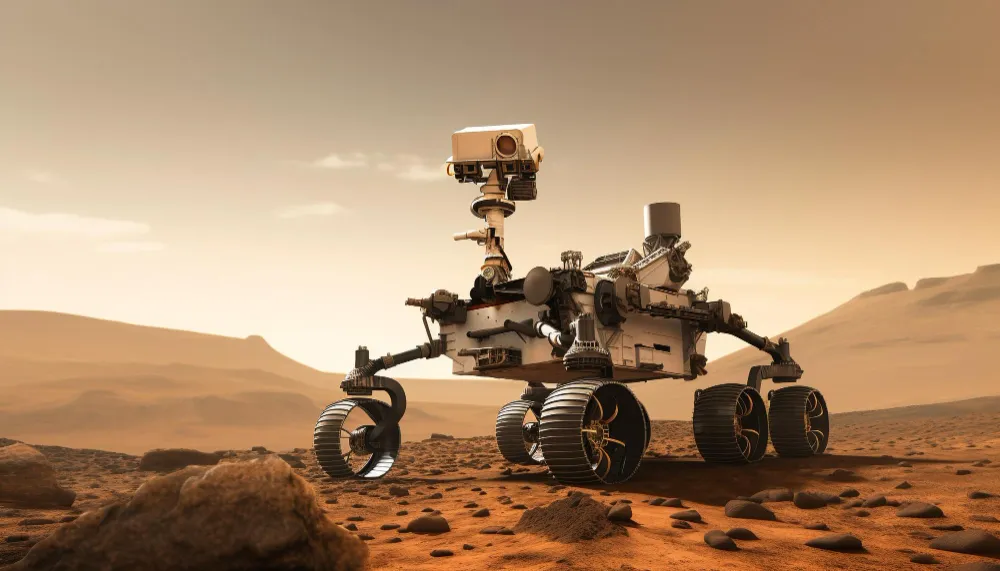
To survive the infamous “Seven Minutes of Terror,” the mission relied on a decentralized, dual-redundant AI navigation array. This system processed real-time LiDAR terrain maps at thousands of frames per second, autonomously identifying hazardous boulders and unstable sand dunes in the landing zone, and dynamically firing retro-rockets to achieve a pinpoint, millimeter-perfect touchdown on the plains of Chryse Planitia.
The Human Element: Psychological and Physical Resilience
Beyond the massive machinery, the success of the mission relied heavily on human endurance. Spending months inside a confined metallic tube, separated from Earth by millions of miles of empty void, places immense psychological strain on a crew.
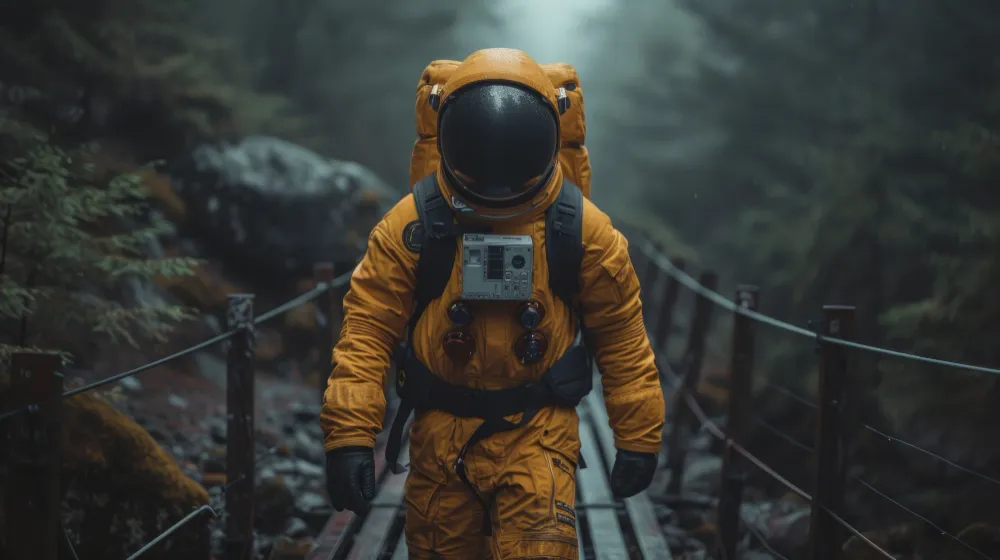
To counter isolation fatigue, the habitat modules were equipped with advanced sensory-enrichment environments. Astronauts utilized high-fidelity virtual reality platforms to simulate terrestrial environments—such as walking through a rain-drenched forest or sitting on a beach—which neurological telemetry proved helped maintain healthy circadian rhythms and stable emotional baselines. Furthermore, variable-gravity exercise centrifuges mitigated bone-density loss, ensuring the crew stepped onto the Martian soil in peak physical condition.

The Verdict: The Multi-Planetary Era Begins
The successful colonization of Mars’ orbit and subsequent surface landing marks the definitive dawn of a new era. The technologies engineered to get humans to the Red Planet are already yielding massive spin-off benefits for Earth, driving unprecedented breakthroughs in water purification, carbon capture, automated agriculture, and lightweight energy storage.
The Ares-IV mission has proven that humanity can overcome the absolute limits of biology and engineering when guided by unified scientific purpose. The footprints left behind in the red dust are a permanent reminder that the sky is no longer the limit—it is merely the starting line.




Latest Posts















One response to “Red Planet Dawn: How the First Successful Manned Mars Mission Altered Human History”
This website was… how do I say it? Relevant!! Finally I have found something
which helped me. Cheers!