

For decades, the traditional classroom layout has remained virtually unchanged: rows of desks, a whiteboard at the front, and heavy paper textbooks. While digital tools like tablets and smartboards have made their way into schools, they simply digitized the existing two-dimensional media. Today, a more profound transformation is underway. Virtual Reality (VR) is shifting from an expensive gaming novelty into a powerful pedagogical tool, gradually redefining how children absorb complex concepts.
The integration of VR into primary and secondary education isn’t happening overnight. Instead, it is following a calculated, gradual roadmap driven by falling hardware costs, specialized software development, and a cultural shift among educators.
Phase One: Moving from Passive Consumption to Immersive Exploration
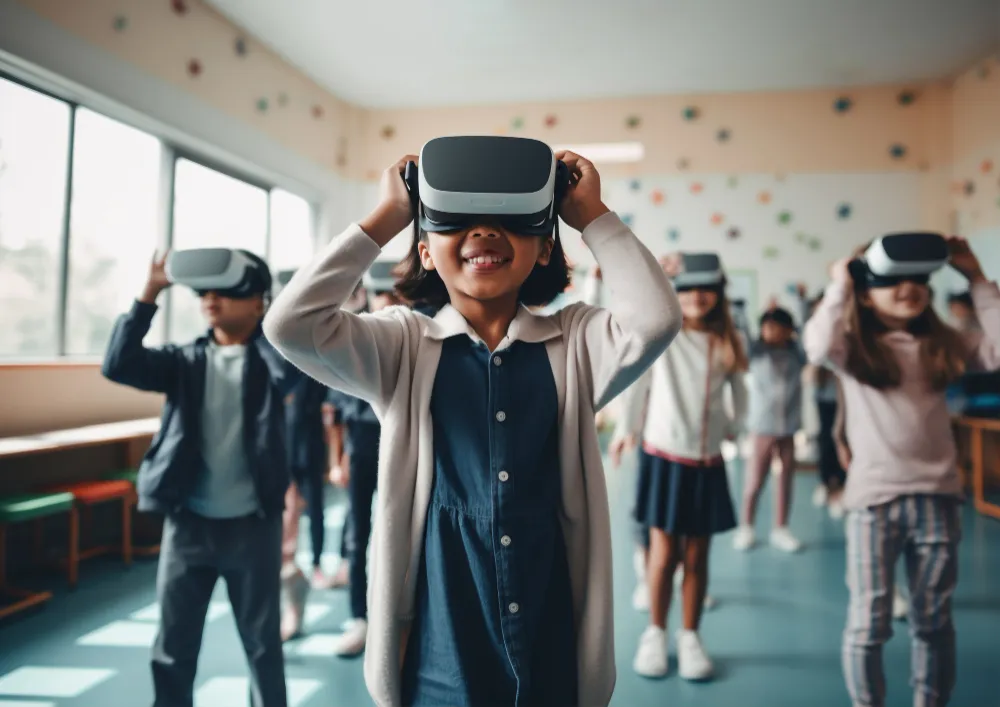
The initial obstacle to VR adoption in schools was always cost and complexity. Early headsets required powerful, expensive gaming PCs and complicated external tracking sensors. However, the rise of standalone, lightweight VR headsets has completely changed the landscape for school IT departments.
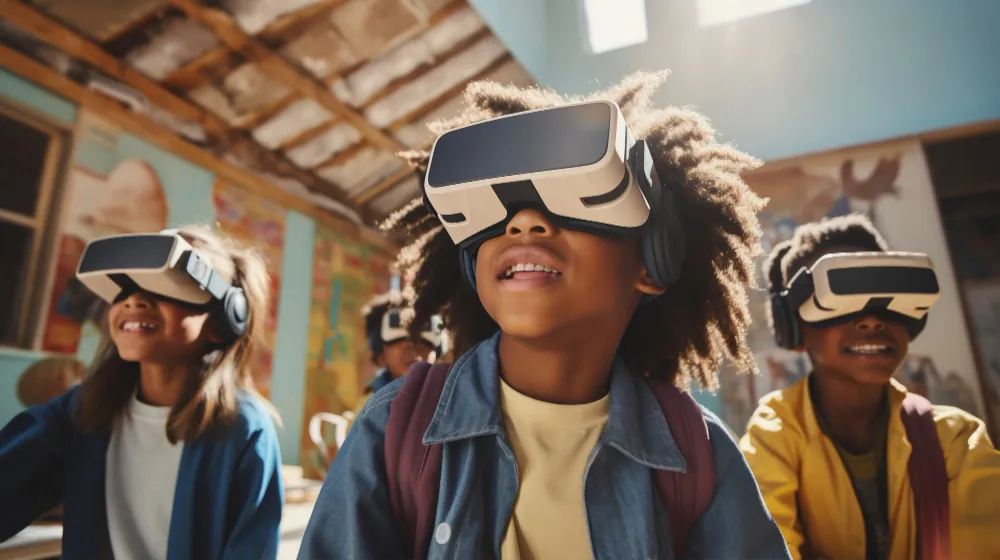
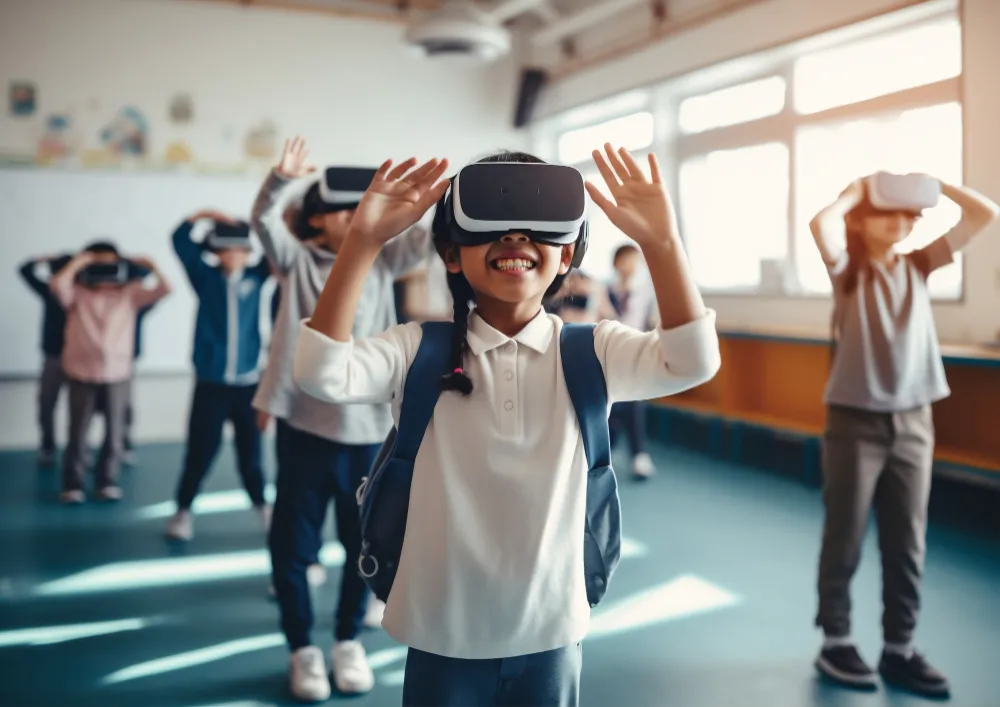
Today, schools are entering the first widespread phase of integration: replacing passive media with immersive field trips.
-
Geographical and Historical Teleportation: Instead of looking at a flat photograph of the Roman Colosseum, students can put on a headset and walk through its arches, observing the scale and architecture as if they were standing in ancient Rome.
-
Microscopic and Astronomical Journeys: Biology classes can shrink down to journey through a human bloodstream, watching white blood cells fight off pathogens. In physics, students can fly through the rings of Saturn to visualize gravitational forces.
-
Safe Experiential Learning: Chemistry students can conduct highly volatile or dangerous chemical experiments in a sandbox VR environment, eliminating the risk of physical accidents or the cost of expensive lab reagents.
The Cognitive Benefits: Retention Through Active Doing
Why are forward-thinking school districts investing in this technology? The answer lies in cognitive science. Studies consistently show that humans retain information much better when they learn through active experience rather than passive reading or listening.
When a student interacts with a three-dimensional object in a virtual space, their brain processes the event as a lived experience. This creates stronger neural pathways and emotional connections to the material.
Furthermore, VR is proving to be an incredible tool for neurodivergent students. Children with ADHD or sensory processing challenges often benefit from the completely isolated, distraction-free environment that a VR headset provides, allowing them to focus entirely on the lesson at hand. We are moving away from an education system where students memorize abstract facts, and toward an era where they experience knowledge. You don’t just read about history anymore—you witness it.
Overcoming the Roadblocks: Content, Training, and Ergonomics
Despite the clear benefits, the path to universal VR adoption faces several real-world challenges. The hardware itself is only a vessel; the true value lies in the curriculum-aligned software.
EdTech startups are currently working hard to bridge the content gap, building structured lesson plans that map directly to international educational standards. Teachers cannot be expected to become VR tech experts overnight; therefore, software platforms must be as simple to launch as turning on a projector.
Another critical consideration is physical ergonomics and health. School guidelines generally restrict VR usage to short, focused sessions—typically 15 to 20 minutes at a time. This prevents digital motion sickness, eye strain, and ensures that students remain grounded in social classroom interactions with their peers and teachers.
The Horizon: Collaborative Virtual Classrooms
As the technology matures, the final phase of integration will involve connected, collaborative virtual spaces. Imagine a classroom where students from London, Tokyo, and Nairobi meet inside a virtual lab to solve a climate change simulation together.
By decentralizing the physical classroom, VR has the potential to democratize high-quality education, giving students in remote or underfunded rural areas access to the same world-class lab environments and simulated exhibits as top-tier private institutions.
Virtual Reality is no longer a futuristic gimmick meant for science fiction. It is a slowly maturing, invaluable educational asset. As headsets become lighter, cheaper, and more deeply integrated into daily lesson plans, the classroom walls will effectively disappear, opening up the entire universe as a living classroom.

Latest Posts